FilmsDraft
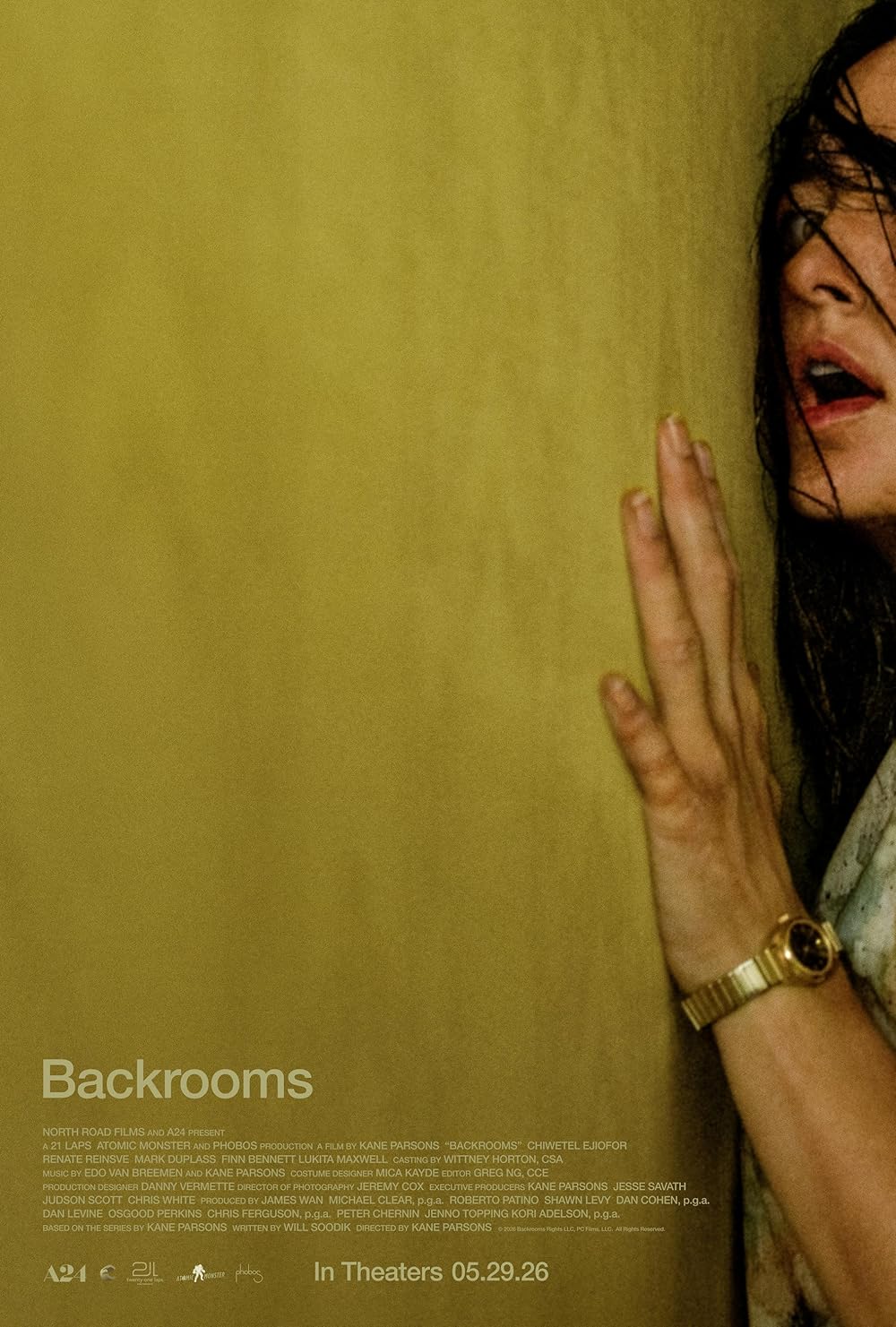
Backrooms
Kane Parsons, Will Soodik
A strange doorway appears in the basement of a furniture showroom.
Psychological HorrorThriller
John Wyndham
This review is currently a draft.
The protagonist takes part in a risky scientific experiment involving consciousness transfer. She wakes up in a strange world that turns out to be Earth's future — a world where a deadly virus has wiped out all men, and women have built a rigidly structured society closely resembling the organization of a beehive.
Mood
Curious
Pacing
Rollercoaster
Aftertaste
Loved it
Would Revisit
Definitely yes
Recommendation
Highly recommend!
It is, they tell me, not nearly so remarkable as it would appear at first sight. The locust, it seems, will continue to produce female locusts without male, or any other kind of assistance, the aphis, too, is able to go on breeding alone and in seclusion, certainly for eight generations, perhaps more. So it would be a poor thing if we, with all our knowledge and powers of research to assist us, should find ourselves inferior to the locust and the aphis in this respect, would it not?
This Wyndham novel caught my attention with its title, and after reading the description I knew I had to read it! My only complaint is that it was so short — I could have read much more. It’s only 87 pages long — which makes it even more impressive how much it manages to say!
I don’t know whether Wyndham held feminist views or intended this to be a feminist novel, but it turned out feminist as hell, girls (and boys).
A couple of things I didn’t love:
The beginning is quite drawn out for such a short story. And one of the more groan-worthy choices is that all women in this world use pink everywhere — terribly stereotypical. But let’s not forget it was written by a man in 1956.
The main character is a textbook victim of the romantic love myth — the idea that everyone has a soulmate and that finding them is the purpose of life. So it’s hard to take her perspective seriously when she’s told that humanity needed to be saved because a man accidentally created a virus that wiped out all men, and her response is essentially to whine “what about men?!”. Girl, please.
There are also moments where it’s obvious a man is writing this “female” world. For example, the Mothers — women who bear children — are unable to read or write, and this is never really justified beyond a vague “they give birth, why bother?” logic. Pregnancy and literacy don’t conflict with each other in any way.
After the disease had struck, women ceased, for the first time in history, to be an exploited class. Without male rulers to confuse and divert them they began to perceive that all true power resides in the female principle. The male had served only one brief useful purpose; for the rest of his life he was a painful and costly parasite.
That said, the story does touch on some genuinely important themes: how society tries to turn women into helpless creatures; how romanticism is sold to women as a life goal; how benevolent sexism replaces outright oppression while achieving the same result. Some moments were even reminiscent of neo-patriarchy.
The story took me on a bit of an emotional rollercoaster — I didn’t love it at first, and then I really did!
After finishing, I went looking for reviews online, and honestly — it was shocking to see how many people find this story genuinely terrifying. I understand why men might, given that it’s about them disappearing from the Earth. But the arguments some women made against a world without men — things like “yes, it would be a world without crime and violence, but also without love and art” — were something else entirely. Talk for yourself! Women are no less loving, caring or creative than men. A huge number of scientific discoveries were stolen from women by men. Many celebrated male writers built their legacies on the paid and unpaid labour of their wives. This world is largely built on the parasitic existence of men and the round-the-clock labour of women who support, provide for and take care of the people supposedly “building” everything.
I don’t know if Wyndham intended this as a dystopia, but in my opinion it ended up in a completely different camp — a genuinely feminist piece that quietly shows the real contribution of men to society, and what life might look like without them.
Man was only a means to an end. We needed him in order to have babies. The rest of his vitality accounted for all the misery in the world. We are a great deal better off without him.
This fictional society has its own problems — some of them a bit contrived — but our current one has far more, and far worse ones. I’d take a rigidly structured female society where some women are forced to give birth and can’t read over a world where women are treated as second-class humans, still forced to give birth, sexually harassed from childhood, and killed for their biology. The current neo-patriarchal society doesn’t serve women in any meaningful way — so why would anyone mourn its destruction?
Overall, a short story packed with good and profound ideas. Highly recommend, and 8/10!
July 13, 2024Kane Parsons, Will Soodik
A strange doorway appears in the basement of a furniture showroom.
Christopher Nolan, Homer
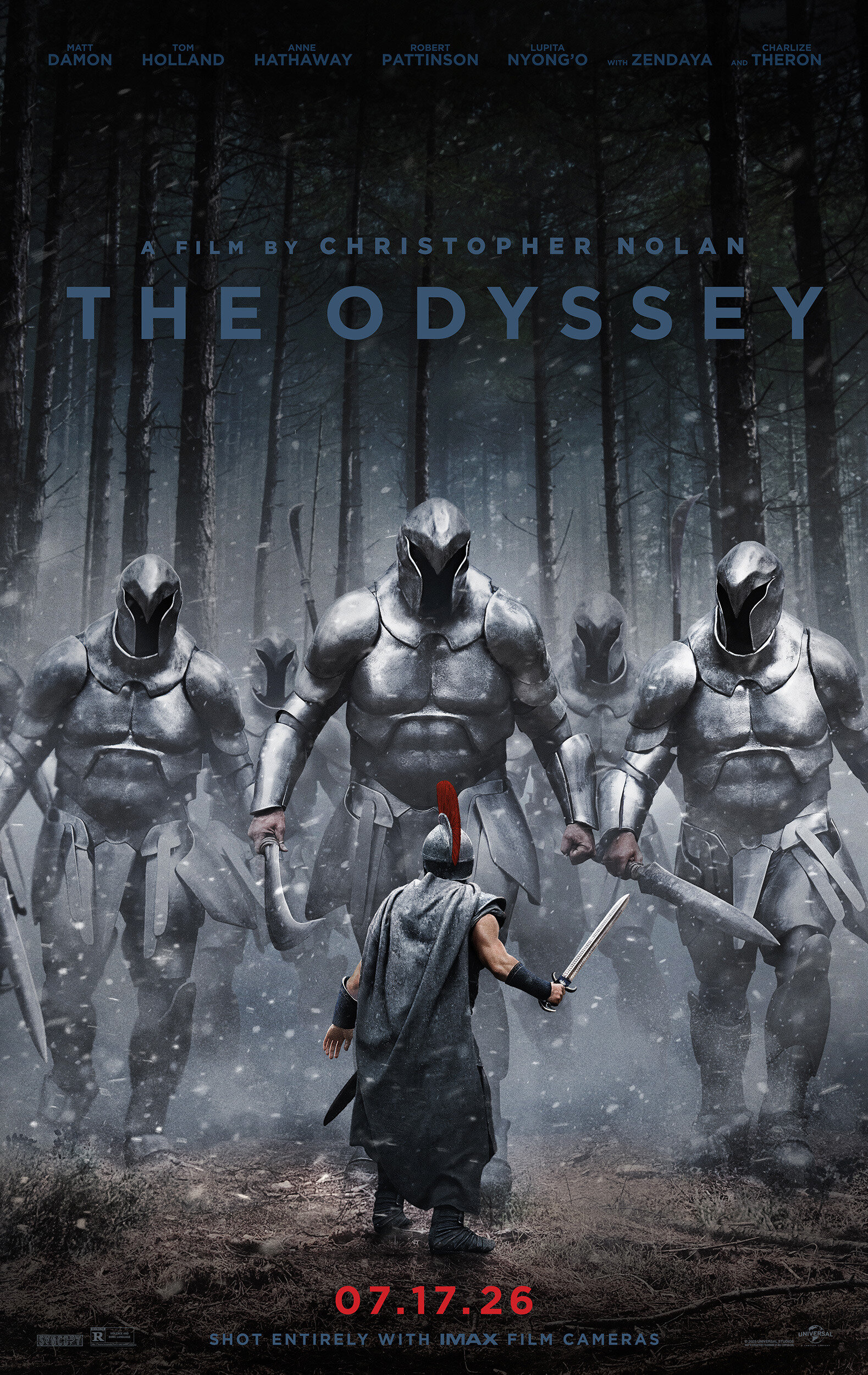
After the Trojan War, Odysseus faces a dangerous voyage back to Ithaca.
Curry Barker
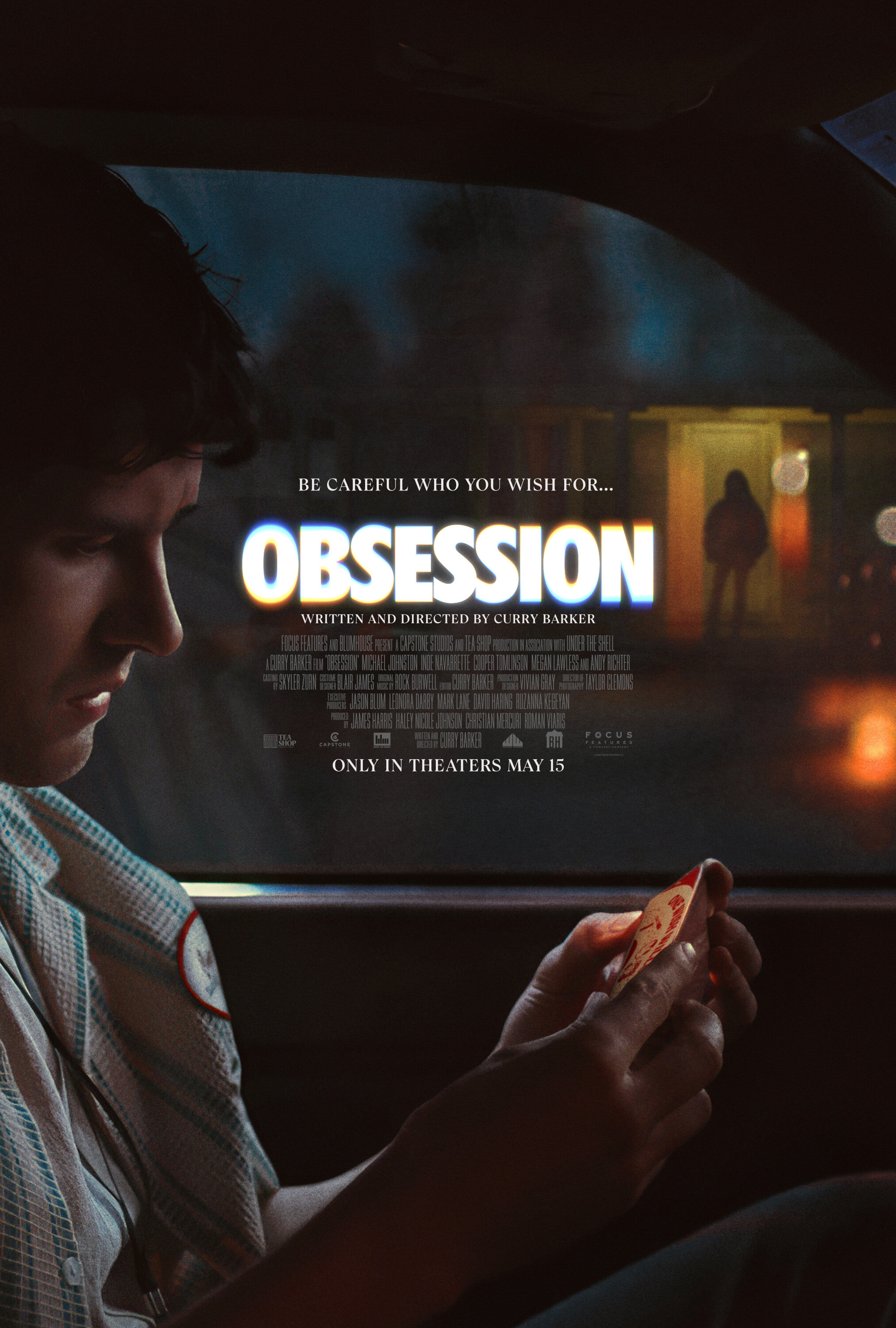
A guy wins his crush's heart by making a wish with the mysterious "One Wish Willow".